Two scientific advances driven by artificial intelligence have landed within days of each other, and the argument goes that the wider public is too swamped by AI news to register what either one means.
The first is a claimed solution to the Navier-Stokes equations, one of the seven Millennium Prize problems set by the Clay Mathematics Institute in 2000, each carrying a $1 million reward.
The equations describe how fluids move, and they matter well beyond mathematics.
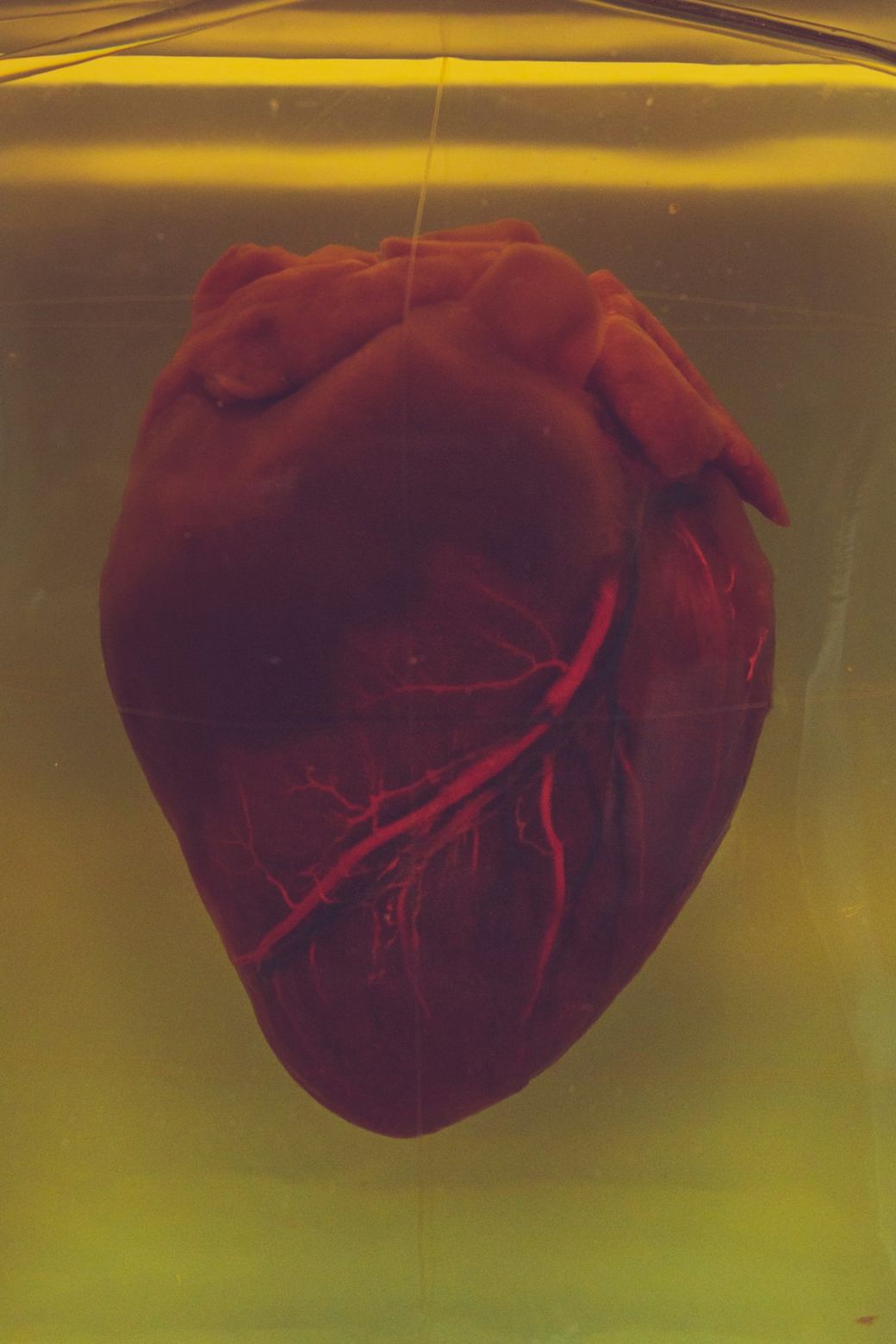
Engineers use them for aircraft aerodynamics, and researchers rely on them to model blood flow, work that bears on the design of devices such as artificial hearts.
Dispute
OpenAI announced on 9 September that an internal model had proved the three-dimensional equations can break down in finite time, a result reached by roughly 10,000 AI agents working for about 88 hours at a cost the company put in the millions of dollars.
The claim, if confirmed, would be the first time AI has cracked a major open problem in mathematics.
It arrived wrapped in a credit dispute.
Tristan Buckmaster of New York University and Levent Alpöge, a mathematician who works for Anthropic, had made progress on closely related fluid-dynamics work using AI tools.
Buckmaster alleged that OpenAI moved on the problem after learning of their method, and that an OpenAI researcher pushed to drop Alpöge from authorship because he works for a competitor.
OpenAI denied the allegations, and said it did not access the pair's data, though it conceded it could not rule out that de-identified data from their use of its products had helped.
There is no evidence that private chat logs were compromised.
Medicine gets overlooked
The second advance is in drug development.
Insilico Medicine, a biotechnology company that designs drugs using generative AI, has begun a Phase III trial of Rentosertib, an oral treatment for idiopathic pulmonary fibrosis, a progressive and incurable scarring of the lungs.
The drug's target was identified by AI and its chemical structure designed by AI, and earlier trial data showed a dose-dependent improvement in lung function.
The company estimates three to four years from the start of Phase III to regulatory approval under favourable conditions.
That kind of result tends to pass with less attention than a mathematical proof, though its practical stakes are at least as high.
Signal against noise
The broader point is one of perspective.
The pace of model launches and headlines is fast enough that individual breakthroughs get flattened into the same stream as product news.
Timelines remain uncertain, and neither the proof nor the drug will reach ordinary use soon.
The case for paying attention rests on treating these results as foundations, the incremental building blocks on which longer-run scientific and medical progress is built, rather than as passing entries in a daily cycle of AI stories.