Demis Hassabis has argued that the arrival of artificial intelligence leaves societies with a choice about how to shape it, rather than a fate to dread.
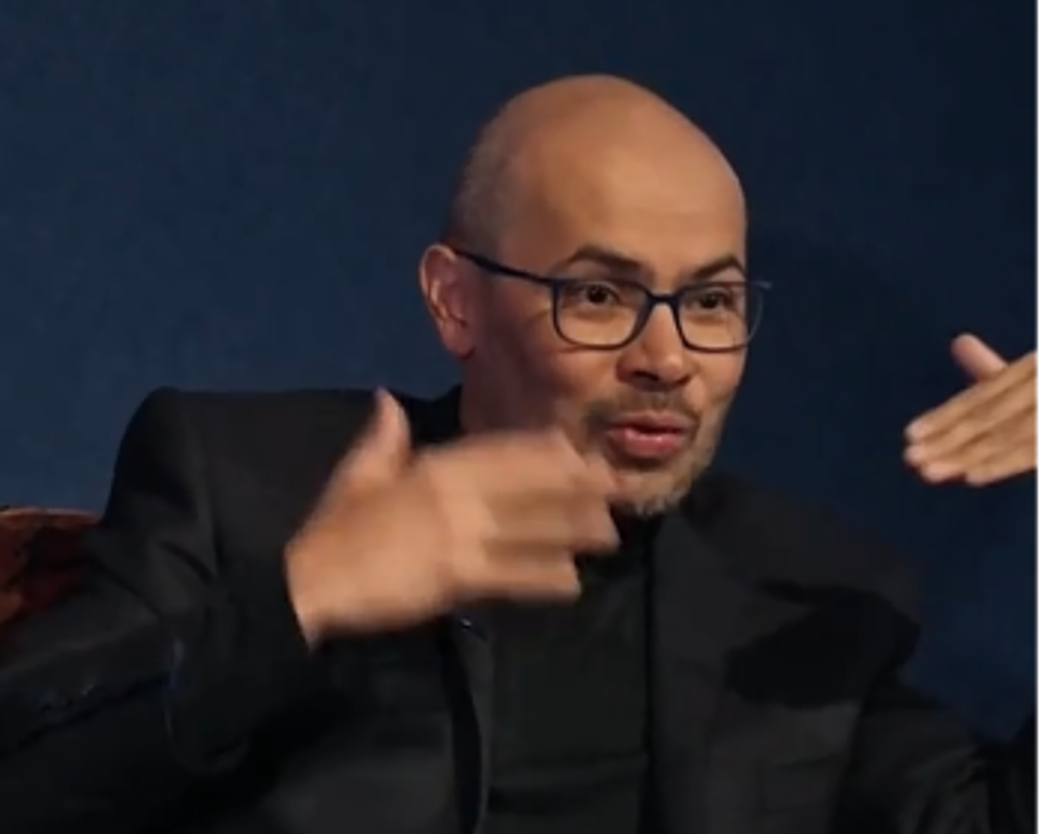
The Google DeepMind chief executive made the case at the Royal Society of Arts, where he received the 2026 Albert Medal for his contribution to advancing AI in the service of humanity.
He spoke in a wide-ranging conversation with Hannah Fry, the Cambridge mathematician and broadcaster, on AI, creativity, scientific discovery and what comes next.
The framing he returned to was one of agency: the future of the technology is unwritten, and the actions taken over the next few years will decide how it turns out.
A believer in human creativity
Hassabis, who shared the 2024 Nobel Prize in Chemistry for his work on protein structures, resisted the idea that AI will hollow out human creative work.
He has described himself as a firm believer in human ingenuity and creativity, and casts the technology as a tool that serves the creator rather than replaces them.
That view rests on his account of what recent models are doing.
He argues the systems behind image and video tools are beginning to act as world models, holding an understanding of physical space and composition rather than memorising patterns, which lets a person direct edits in ordinary language.
The same capacity for genuine novelty, he has said, first showed itself a decade ago when AlphaGo, DeepMind's board-game system, produced moves no human player had found in the game's long history.
Science as the payoff
For Hassabis, the clearest case for AI is in science and medicine.
He points to AlphaFold, the system that predicted the structures of some 200 million proteins and which DeepMind released free to researchers, as the model for what the technology should deliver.
Roughly three million researchers across nearly every country now use it, and he has argued the field needs many more results of that kind rather than promises.
Through Isomorphic Labs, the Alphabet company he founded, he wants to cut drug discovery from years to months, and eventually to fund cures for neglected diseases that offer no commercial return.
His ambition runs to solving disease altogether, along with contributions to climate and energy.
The choice ahead
The optimism sits alongside a warning that has grown sharper in his recent remarks.
Hassabis has put the scale of the shift at ten times the impact of the Industrial Revolution, arriving ten times faster, and has called the present the foothills of the singularity, the point at which broadly capable AI reshapes human life.
He has warned repeatedly of a race to the bottom among AI labs, a dynamic in which any company that takes longer to make a system safe loses ground to one that ships first.
His answer is what he calls smart regulation: light, fast-moving oversight able to track the science rather than freeze it, backed by international coordination.
He advises the UK government on AI, and his intervention lands as ministers weigh how far to regulate the sector.
The message to a British audience was that the country can help write the outcome rather than wait for it, provided it treats the moment with the seriousness it demands.