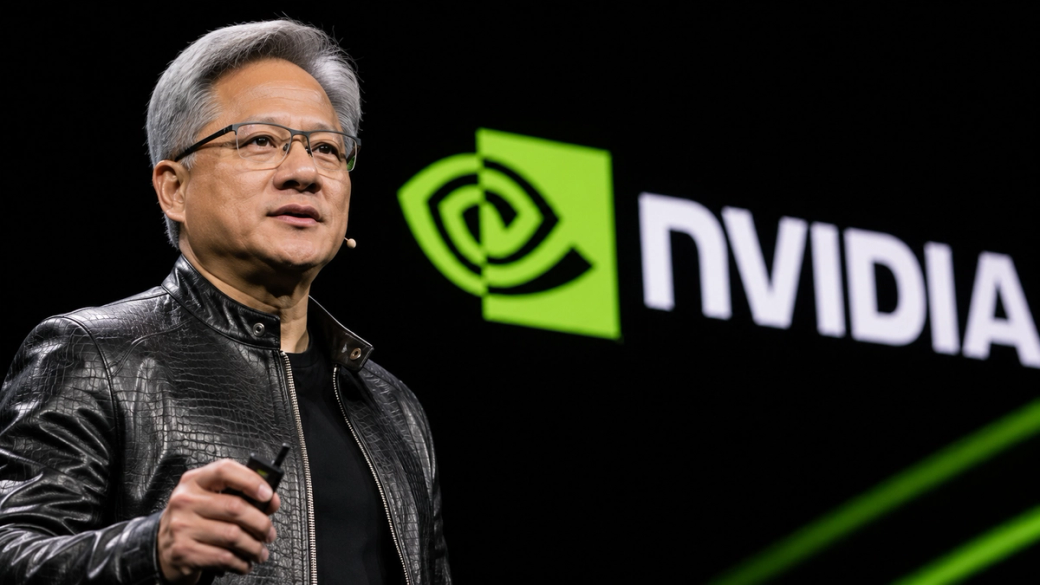
Jason Calacanis, the investor and host of This Week in Startups, believes Jensen Huang, the chief executive of Nvidia, is building a parallel business that could hollow out the revenues of Anthropic and OpenAI.
Calacanis's argument, laid out on his podcast, starts from Nvidia's position at the base of the industry: the chipmaker already powers around 72% of the infrastructure running frontier AI models.
His lateral leap is that Nvidia will use that position not to sell more chips to Anthropic and OpenAI, but to sell hardware directly to their customers instead.
Racks instead of rentals
The mechanism, as Calacanis describes it, is straightforward: Nvidia installs hardware racks on-site at companies such as Uber, letting them run AI workloads locally rather than paying a frontier lab for access by the token.
He calls the result "AI sovereignty", with data and processing kept inside the company rather than sent out to an external model provider.
The commercial hook, in Calacanis's telling, is that the arrangement is unmetered: a fixed hardware cost in place of a token bill that can swing wildly from month to month.
He sketches a hypothetical in which Uber's chief financial officer swaps a $400 million annual token spend for a fixed-cost rack, removing what he frames as a recurring internal fight over AI budget.
Why the timing works
Calacanis ties the strategy to two trends he says are moving in Nvidia's favour: open-source models improving by around 30% every six months, and Nvidia's own hardware gaining roughly 50% in performance every 18 months.
Put together, he argues, that compounding improvement narrows the gap between an in-house rack running an open model and a subscription to a closed frontier system.
The salesman
Calacanis casts Huang as an unusually effective salesman for the pitch, able to sell corporate boards on predictability and control rather than raw capability.
Whether Anthropic and OpenAI can hold their customers on tokens, or watch Nvidia sell hardware to the same clients instead, was Calacanis's central question on the episode.