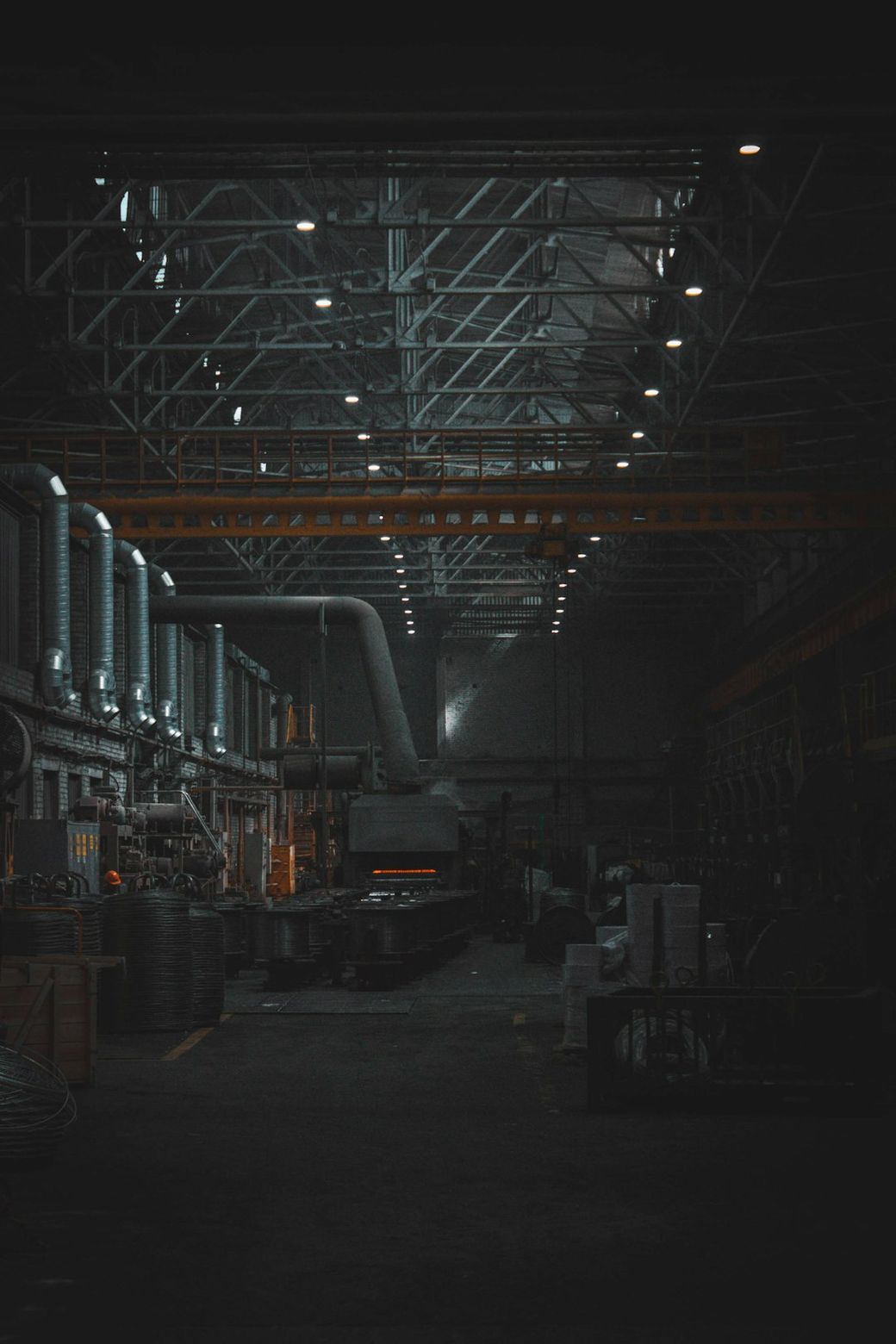
"Dark factories" are a new type of facility being built across China that operate almost entirely without human presence, lighting or heating.
These facilities run 24 hours a day in pitch-black conditions, using advanced robotics and AI systems to manage processes including assembly and packaging.
How machines work without any light
To navigate and operate in the dark, the machines inside these factories rely on infrared technology, lidar and machine vision, rather than the visible light human workers would need.
The Xiaomi example
A Xiaomi factory in Changping, Beijing, is held up as a leading example of this approach.
The 81,000 square metre site cost around 2.4 billion yuan, or roughly $330 million, to build, and runs 11 robotic production lines managed by Xiaomi's own AI platform, known as HyperIMP.
The plant achieves roughly 81% automation, producing close to 10 million smartphones a year, working out to a phone every 3.15 seconds averaged across the year, or around 27,000 devices a day.
A small number of staff remain on site for supervision and maintenance work that robots cannot yet perform, rather than the factory running with no human presence whatsoever.
A national pattern, not a one-off
China's commitment to automation extends well beyond a single factory.
The country accounted for 54% of all industrial robot deployments globally last year, according to the International Federation of Robotics, a figure that exceeds the combined total for the United States and Japan.
Beyond the factory floor
The scope of this automation extends past manufacturing altogether, into so-called "ghost" shipping ports, automated bridge-building equipment and fully automated rice farms.
Taken together, these developments point toward a future in which a growing share of China's infrastructure could ultimately be built and maintained by AI-driven robots, rather than human labour, though for now humans still play a supervisory role even inside the country's most automated sites.