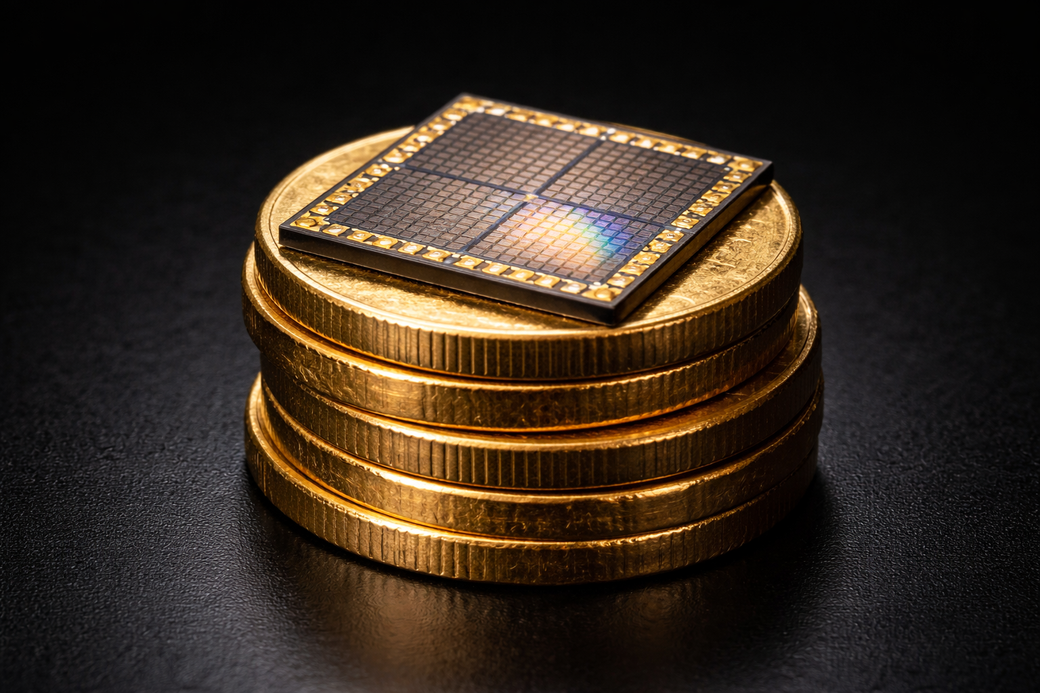
The steady fall in memory prices that helped keep phones affordable for years has abruptly reversed.
The Verge reports that Apple's upcoming models are likely to carry higher price tags as manufacturers stop absorbing soaring memory costs.
The squeeze is being driven above all by rising costs for RAM and related memory components.
Apple's next launch is the immediate test of how far that pressure will be passed on to buyers.
Why capacity cannot catch up quickly
Industry trackers and parts suppliers say the pressure is not a temporary blip but the result of a structural reshuffle in the memory market.
Demand from artificial intelligence and server infrastructure is absorbing manufacturing capacity once used for phones.
Micron's president and chief operating officer, Manish Bhatia, told The Verge that the industry needs to build more wafer capacity.
Specialised wafer lines that feed modern DRAM and high-bandwidth memory cannot be added quickly, meaning prices rise while capacity slowly catches up.
The numbers behind the increase
Independent trackers have begun mapping out the scale of the shift.
One forecast described a roughly 20% increase in overall costs as "moderate" by comparison with memory specifically.
That same forecast calculated that memory costs alone for a 256 gigabyte Pro model could rise by nearly 400% year on year.
Other reporting suggests Apple's Pro models could see launch prices move somewhere between 10% and 20% higher, a broad range that would add materially to the final cost for buyers.
Why small phones make the problem worse
Fitting higher-performance memory and more advanced components into a small phone body is expensive in its own right.
Engineers must trade space and thermal headroom for parts that cost more to manufacture and test in a smaller package.
Awkward timing against rivals
The timing adds further pressure, since several rivals are readying premium phones of their own just ahead of Apple's event.
In China alone, Huawei and Xiaomi are stepping up their own campaigns, meaning any price move from Apple will be felt against an already tense competitive backdrop.
What Apple decides to do
Apple's autumn event and retail timetable are close, with the company's September countdown widely tracked as the industry's annual pricing moment.
The practical question for buyers is whether Apple absorbs the increases itself, reduces storage or memory options, or simply raises headline prices.
Early signals from suppliers and market trackers point toward higher launch prices being the likeliest outcome.
A wider industry problem
This shock extends well beyond Apple, since the same forces pushing up phone costs are also raising component bills for laptops and games consoles.
Consumer choice is shifting from a volume game toward one where premium devices carry a larger share of the overall cost burden.
Apple's pricing at launch will offer the first clear signal of how manufacturers intend to divide that burden between their own margins and their customers.