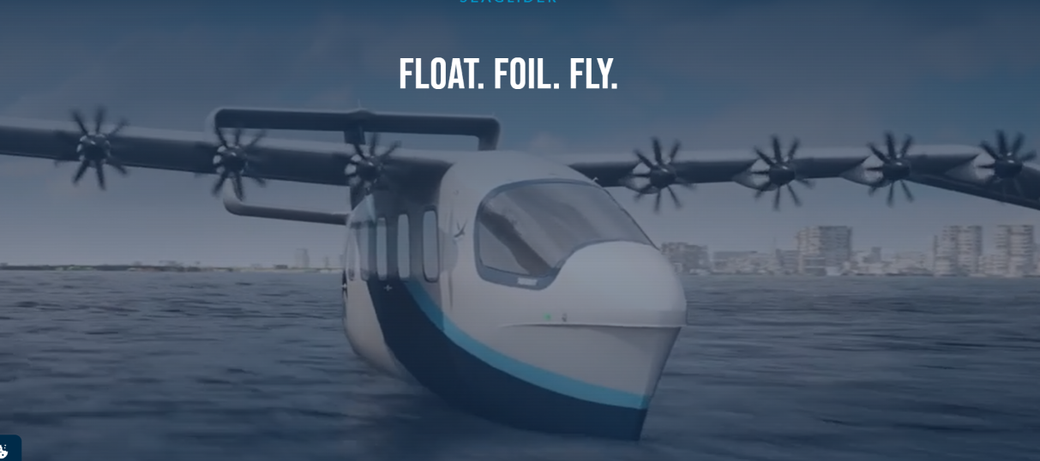
REGENT successfully conducted the first crewed flight of its full-scale Viceroy seaglider on 2 September.
The flight took place over Narragansett Bay in Rhode Island, where the craft carried two captains to an altitude of about 33 feet.
How the craft actually works
The Viceroy is an all-electric vehicle that operates in three distinct stages.
It begins by floating on its hull, transitions to rising onto hydrofoils as it accelerates, and finally flies within one wingspan's distance of the water's surface.
The craft achieves flight through a phenomenon known as ground effect, in which a cushion of trapped air beneath the wings provides lift that would otherwise be unattainable for a battery-powered machine of this size.
A regulatory quirk
Because the Viceroy operates within ground effect and remains close to the water at all times, it is regulated in the United States as a maritime vessel by the Coast Guard, rather than as an aircraft by the Federal Aviation Administration.
It is flown by certified mariners rather than licensed pilots as a result.
What the test actually showed
During the 30 second flight, the prototype covered 1,956 feet at roughly 33 feet above the water.
REGENT said the milestone makes the Viceroy the largest all-electric wing-in-ground effect craft ever to fly with people aboard.
"This is the moment we have been envisioning and tirelessly pursuing for the past five and a half years: REGENT has successfully proven safe, efficient ground-effect flight," said Billy Thalheimer, REGENT's co-founder and chief executive.
What comes next
REGENT says the milestone marks the start of the programme's final stage of sea trials.
The finished 12-passenger Viceroy is designed for speeds of up to 180mph and a range of up to 180 miles, with the company saying it is now moving toward production to deliver seagliders to coastlines around the world.