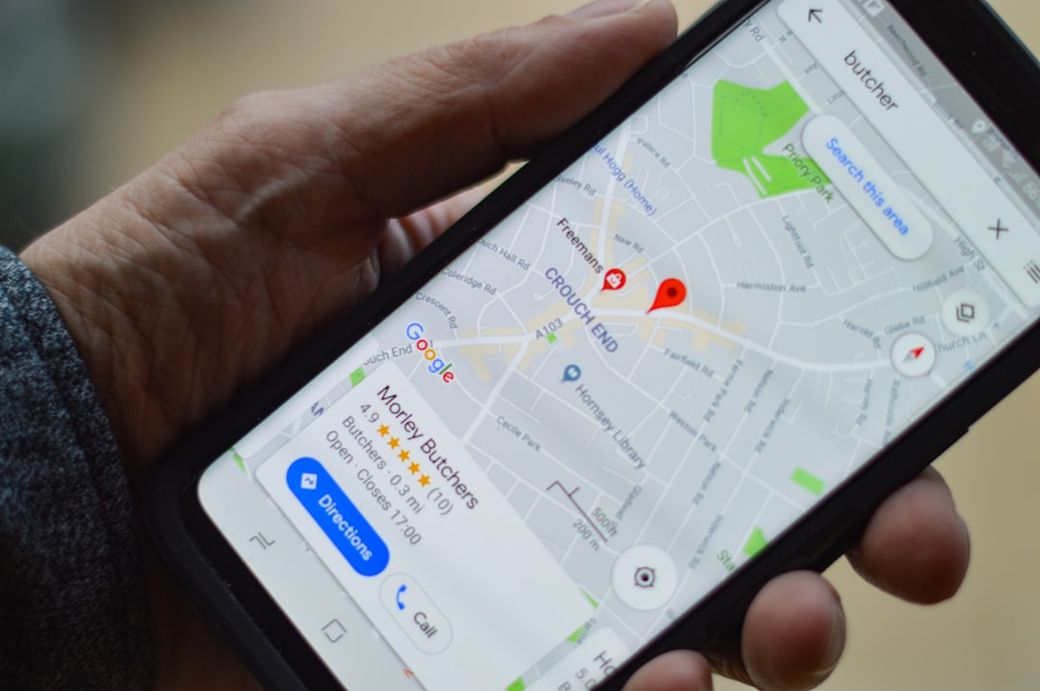
The most-used map on Earth has decided that showing you the restaurant is no longer enough. Google Maps is gaining what the industry calls agentic features — the ability not merely to answer but to act. Food ordering has arrived through the app's Ask Maps assistant, and Google has confirmed to Skift that agentic hotel booking is now live in a limited US test, delivering on promises the company made in November.
The shape of the change is worth a moment. Ask Maps began as a question box — what time does this close, is there parking. It now has what Google calls Personal Intelligence, and with it a broader range of personalised, conversational requests: the assistant knows your context and can carry out multi-step tasks, of which ordering dinner is the flagship example. As TechCrunch put it, the ambition is to turn Maps from a navigation tool into an assistant capable of helping with your plans from start to finish. You tell the map what you want; the map deals with the middlemen.
The convenience is real and should be said plainly. A single interface that finds the restaurant, places the order and books the room removes several of the small frictions that fill an evening, and for anyone who finds delivery apps a hostile maze, handing the job to a conversational assistant is a genuine improvement.
Now the desk's questions, in rising order of consequence. First, the mundane: when the agent orders, whose customer are you — Google's, the restaurant's, or a delivery platform's — and where do you go when the order is wrong? Errands involve money, and money involves disputes; the announcement is quieter on remedies than on capabilities. Second: an assistant with Personal Intelligence is, by construction, an assistant reading your patterns. The map already knows where you go. It now stands to learn what you eat, where you sleep and what you can be talked into; that is a different order of profile, and worth deciding about consciously rather than by default. Third, and most practical: agents make mistakes, and a mistake that merely misdirects you is cheaper than one that books a non-refundable room. There is a reason Google is testing hotels cautiously.
Our advice for the curious: try it on the low-stakes end — dinner is a fine experiment, a fiver's worth of risk — and let the hotel booking prove itself on other people first. Check the order confirmation the old way, because "the AI handled it" is not yet a phrase that wins a chargeback dispute.
The map was the internet's most trustworthy tool precisely because it only ever described the world. It is now starting to act in it. That transition can be done well, and Google has the resources to do it well. But trustworthiness at the describing business does not transfer automatically to the errand business. It has to be earned there too, one correctly delivered dinner at a time.