
What's new: Your internet router is being turned into an intruder alarm (if you're a Comcast customer using Xfinity Shield)
Did you know that your wi-fi router can be used to see the things in your home?
It is like something from a spy movie, but nevertheless, it is true. The signals and the sensors that allow a wifi router to distribute the internet through rooms can be configured to detect both spaces and movement. And, now, a new router being rolled out by Xfinity positions this latent technical capability into a real product.
Comcast calls the feature Wi‑Fi Motion, and, starting this week, it is in the process of making it available to millions of routers.
The feature works by enabling the detection of activity inside a home and alert the user through an app, turning already‑installed kit into sensors rather than selling separate hardware.
It's opt-in, and a software-only deploy (if the router's new enough)
The service runs on advanced gateways, starting with XB7 and newer, and is opt-in.
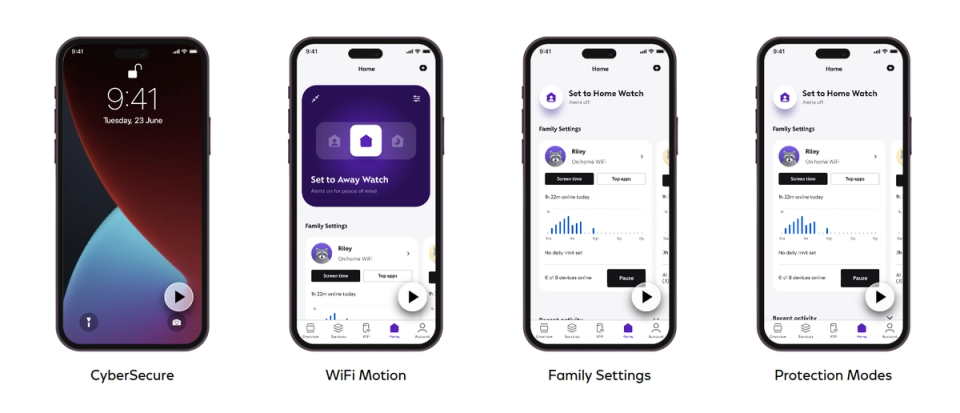
It works by noticing interruptions to radio signals between the gateway and devices on the home network and then sends a notification through the Xfinity app when it detects movement.
Comcast is not the first to try radio‑based presence sensing, but the technology has become more accurate recently, which is why the cable company is folding it into home‑security bundles, rather than niche products.
Practically, Comcast has packaged the capability into its app so customers can enable it without new hardware.
It is being promoted as a way to get basic motion alerts alongside the network protections in Xfinity Shield.
This makes it a camera‑free approach for households that want simple presence notifications.
Privacy
The new product does, however, put motion data generated in your home on a path that can be shared.
It is a convenience that comes with a concrete legal trade‑off.
An Xfinity support page warns, "Comcast may disclose information generated by your Wi‑Fi Motion to third parties without further notice to you," citing law enforcement investigations, legal disputes or court orders as examples may disclose information.
For users, the balance is straightforward: the feature offers no video, only motion signals, yet those signals can be treated as discoverable information.
If you value minimising the legal visibility of what happens inside your home, that trade‑off is material.