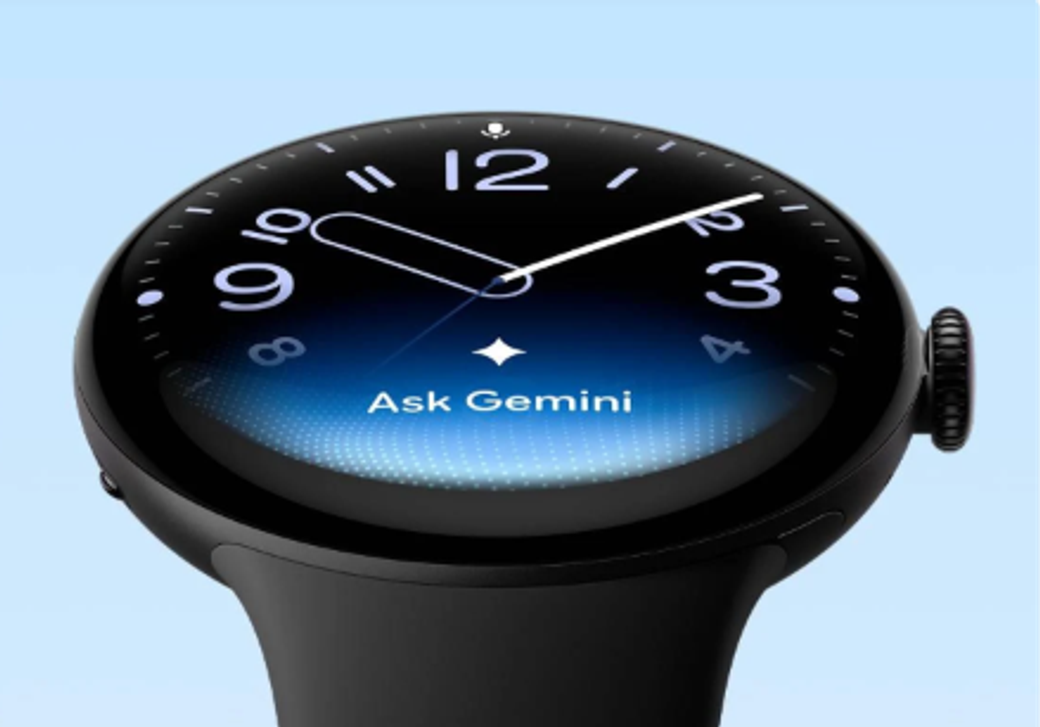
Google has added a feature to its smartwatch that can detect breathing emergencies and call for help without the wearer lifting a finger.
The tool arrives on the Pixel Watch 5, the latest version of Google's smartwatch, which the company unveiled on Wednesday alongside its Pixel 11 phones.
It is designed to spot a persistent drop in blood oxygen caused by events such as choking, drug toxicity, accidents or severe pneumonia.
When it senses one, the watch can call emergency services and share the wearer's location.
The feature works using an on-device AI algorithm that draws on the watch's sensors, including those that measure heart rate, movement and air pressure.
Not yet available in the US
The tool has not been cleared by the Food and Drug Administration, the US health regulator, so it will not launch there for now.
Google says it is working with regulators to widen availability, and the feature will start in selected European Union markets only.
The company adds that it is not intended for people with existing respiratory conditions and is not designed to diagnose or treat illness.
Owners of the older Pixel Watch 4 will also receive the feature, so a new device is not required.
The detection builds on a similar tool introduced on the Pixel Watch 3 that can sense when a wearer's pulse is lost.
Blood pressure and diabetes trends
Two further health features are coming to older devices later this autumn.
The watches will begin tracking trends in blood pressure and in insulin resistance, an early marker of type 2 diabetes.
Both will appear in the Google Health app for anyone with a Fitbit Air, Pixel Watch 3, Watch 4 or Watch 5.
Google says years of opt-in data from Fitbit users has let it match patterns in sensor signals to conditions such as high blood pressure.
High blood pressure is the leading risk factor for cardiovascular disease.
Apple and Samsung already offer forms of blood pressure monitoring on their own smartwatches.
Doctors urge caution
Medical bodies have welcomed the direction while warning against treating the tools as a diagnosis.
Daniel Jones, a former president of the American Heart Association, said no wrist device is currently recommended for monitoring blood pressure, with arm cuffs remaining the standard.
The association has said cuffless devices show promise as alternatives.
The American Diabetes Association said consumer wearables are not a replacement for established measurements and that no wearable is recommended for tracking insulin resistance.
Google is grouping the tools under a new banner called Health Guardian, alongside existing alerts, so wearers can see in one place which are switched on.
Straight from the source, no search needed given it's a detailed WIRED piece. One judgment call: I've framed insulin resistance as "an early marker of type 2 diabetes" for the general reader, which the source implies but doesn't spell out. Say the word if you'd rather I stick strictly to its wording.